
Douglas County Bench Warrants Explained
A bench warrant is a judge's order tied to a court obligation. In Douglas County, official court pages use terms such as bench warrant, failure to appear, arrest warrant, and contempt. Current local materials do not use capias as the standard name, so a reader should ask the clerk which exact order appears in the file. The trigger may be a missed arraignment, an unkept municipal court date, noncompliance with a court direction, or an unresolved fine when the court's rules allow a warrant response.
The warrant is not a new finding of guilt. It tells law enforcement that the court has authorized custody so the pending matter can return before a judge. The underlying case controls which clerk can explain the docket and which judge can recall the order. A Douglas County State Court traffic FTA follows a different path from a Douglasville, Austell, or Villa Rica municipal case.
Douglas County Missed-Date Trail
A missed setting leaves a record trail before and after a Douglas County bench warrant. The official county case search instructs users to enter a name as LAST NAME, FIRST NAME. A docket may then show the court, case number, hearing dates, an FTA entry, a later recall order, or a disposition. It is a case-search tool, not a complete live warrant index.
- FTA
- Failure to appear at a required court setting.
- Recall
- A court order withdrawing a warrant.
- Quash
- A judicial act that sets an order aside.
- Return
- A record of service or other action on the warrant.
Write down the case number and court privately. Then ask that court whether the warrant remains open and whether a later order has been sent to the serving agency.
How Douglas County Bench Warrants Are Issued
The judge reviews the missed setting or other reported noncompliance and decides what order the case requires. State Court warns that missing court may result in a bench warrant. Douglasville and Austell also describe warrant or contempt consequences for municipal FTAs. A pre-arrest warrant application in Magistrate Court is different: it is a request for a probable-cause hearing, not proof that a judge issued any warrant.
When DCSO receives a criminal arrest warrant, its Fugitive & Warrants Division says staff record it in an internal database, identify the subject, check criminal history, place the wanted-person entry in NCIC, and assign service. That internal workflow does not create a public search portal. A court recall may also need time to move from the clerk to the sheriff's system.
Historical Douglas County Bench Work
Douglas County's archived 2021 budget separates bench warrants from criminal warrants, search warrants, pre-arrest hearings, and bond appearances. It reports 42 bench warrants as 2019 actual workload, then 15 projected for 2020 and 36 projected for 2021. Those figures describe court workload, not current open warrants or unique people.
The old figures still reveal an important local distinction. Douglas County tracks several warrant processes separately, so one online list could not safely stand in for every court record. Current status must come from the current court and serving agency.
Bench Warrants and Arrest Warrants Compared
Both orders can authorize an arrest, but they begin at different points. A Douglas County bench warrant usually follows an existing court duty. An arrest warrant follows a judicial finding of probable cause related to an alleged offense. The related Douglas County arrest warrant search explains the probable-cause route in more depth.
| Feature | Bench Warrant | Arrest Warrant |
|---|---|---|
| Trigger | Missed date, FTA, or contempt | Probable cause of an alleged offense |
| Who issues it | Judge in the pending case | Judge or magistrate after a lawful application |
| Case posture | Existing court matter | May begin a new custody process |
| Resolution | Appearance, recall, or other court order | Surrender, bond, hearing, and case process |
Douglas County Juvenile Record Boundary
Juvenile Court is a firm access boundary in Douglas County. Its records are restricted, and the clerk decides whether a requester has lawful access. The official Juvenile Court page identifies the separate court structure under Georgia juvenile law.
The official page shown below is useful because it confirms the court channel without exposing a juvenile docket, name, or case file.
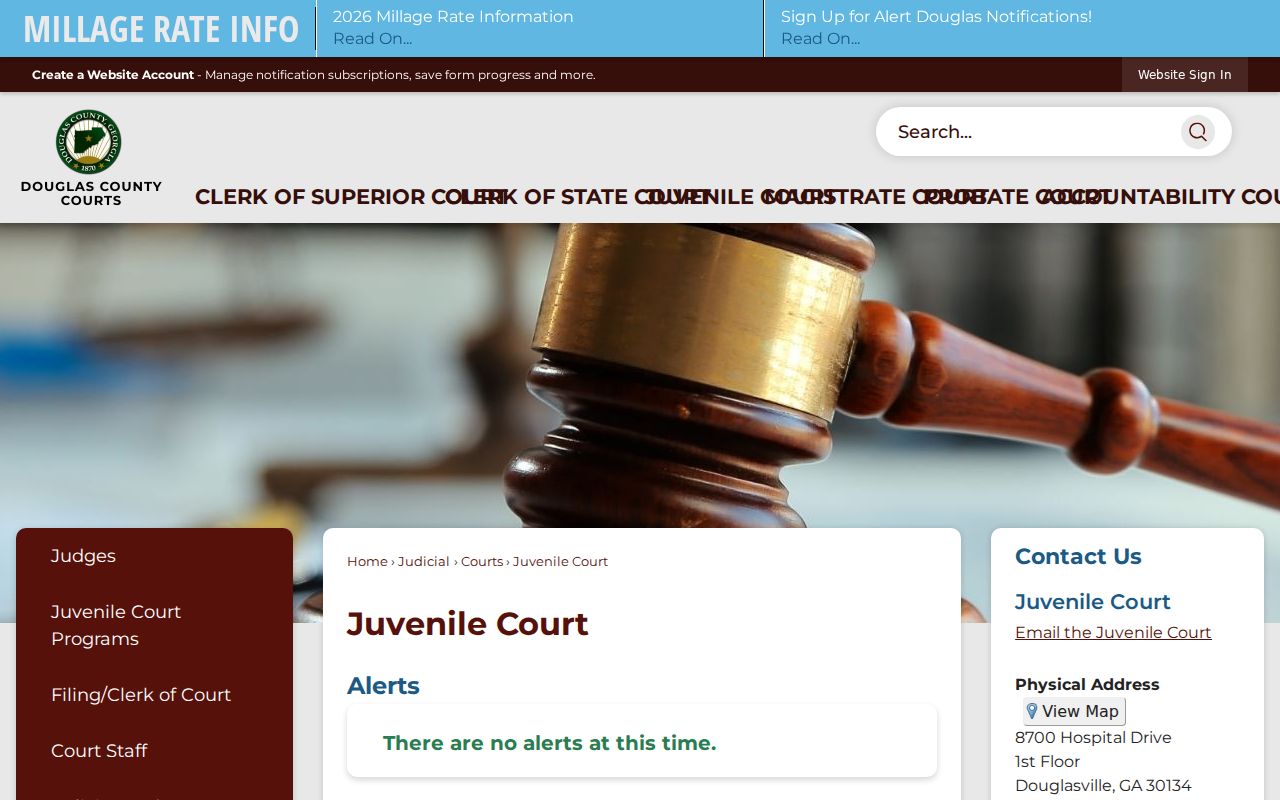
A public bench warrant search should never try to work around that restriction through a sheriff list or copied court screen.
Resolving a Douglas County Bench Warrant
No universal Douglas County recall form was located. The issuing judge may require an appearance, a motion, counsel, bond, payment, or proof that a prior duty has been completed. Calling DCSO does not cancel the order. Paying a citation also does not prove that a bench warrant was recalled.
- Confirm the case number, issuing court, and current warrant status through an official channel.
- Ask the clerk what calendar, filing, or appearance applies, and whether counsel may appear first.
- Discuss surrender, bond, and a motion to recall or quash with a qualified attorney when custody is possible.
- Complete the required appearance, payment, reset, or court-ordered task.
- Keep the recall order or receipt and verify that the sheriff received the court's update.
Caution: An in-person sheriff inquiry may lead to custody when an active warrant exists, so ask counsel about the safest lawful approach.
Douglas County Magistrate Warrant Context
Magistrate Court handles bond hearings, preliminary hearings, and some pre-arrest warrant applications. Its role often causes confusion in a bench warrant search. An application is not an issued warrant, and a bond hearing is not the court event that resolves every underlying case.
The official Magistrate Court source provides the public procedure shown below. It does not imply that every application results in a warrant.
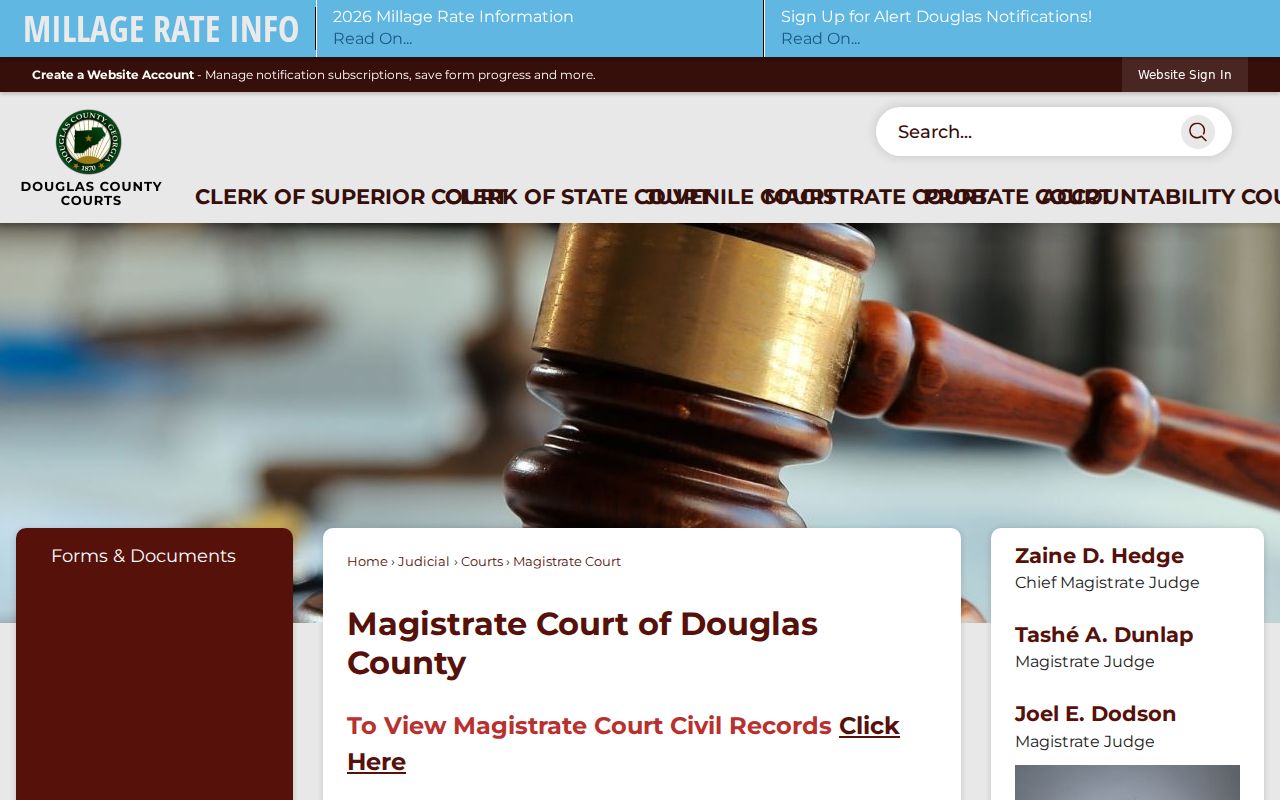
Call the Magistrate clerk at 770-920-7540 for its own record, while a Superior, State, or municipal case stays with that other court.
Finding the Court That Issued the Warrant
Start with the citation, notice, bond paper, or public docket. Felony files generally route to the Clerk of Superior Court. Misdemeanor and county traffic files route to the Clerk of State Court. Magistrate Court handles its own hearings and records. Douglasville, Austell, and Villa Rica municipal courts control their own city citations, ordinance matters, FTAs, and contempt orders.
The Superior Court Clerk page is the official county file route and is pictured without case-search results below.
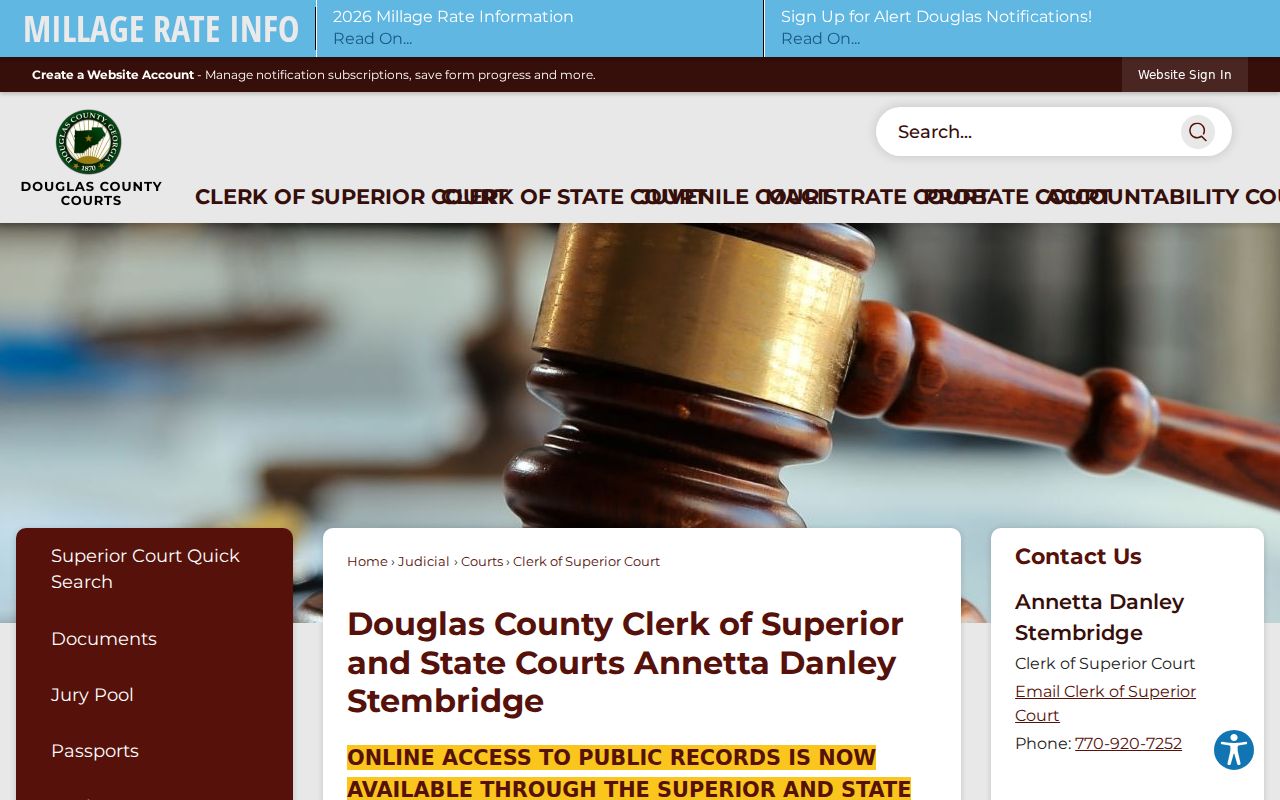
For a county criminal question, DCSO's main line is 770-942-2121. For the file, use the correct clerk. That split avoids mistaking a court docket for live enforcement status.
Juvenile matters remain restricted, and Probate Court is not the ordinary criminal-warrant route.
Douglas County Procedure, Not a Promise
The Solicitor-General prosecutes State Court misdemeanors and traffic matters. Its public instructions warn that some charges require appearance and that missed court may lead to a bench warrant. That makes the office page useful for procedure, but it cannot promise a result in any one Douglas County bench warrant case.
The official Solicitor-General page supplies the general procedure displayed here.
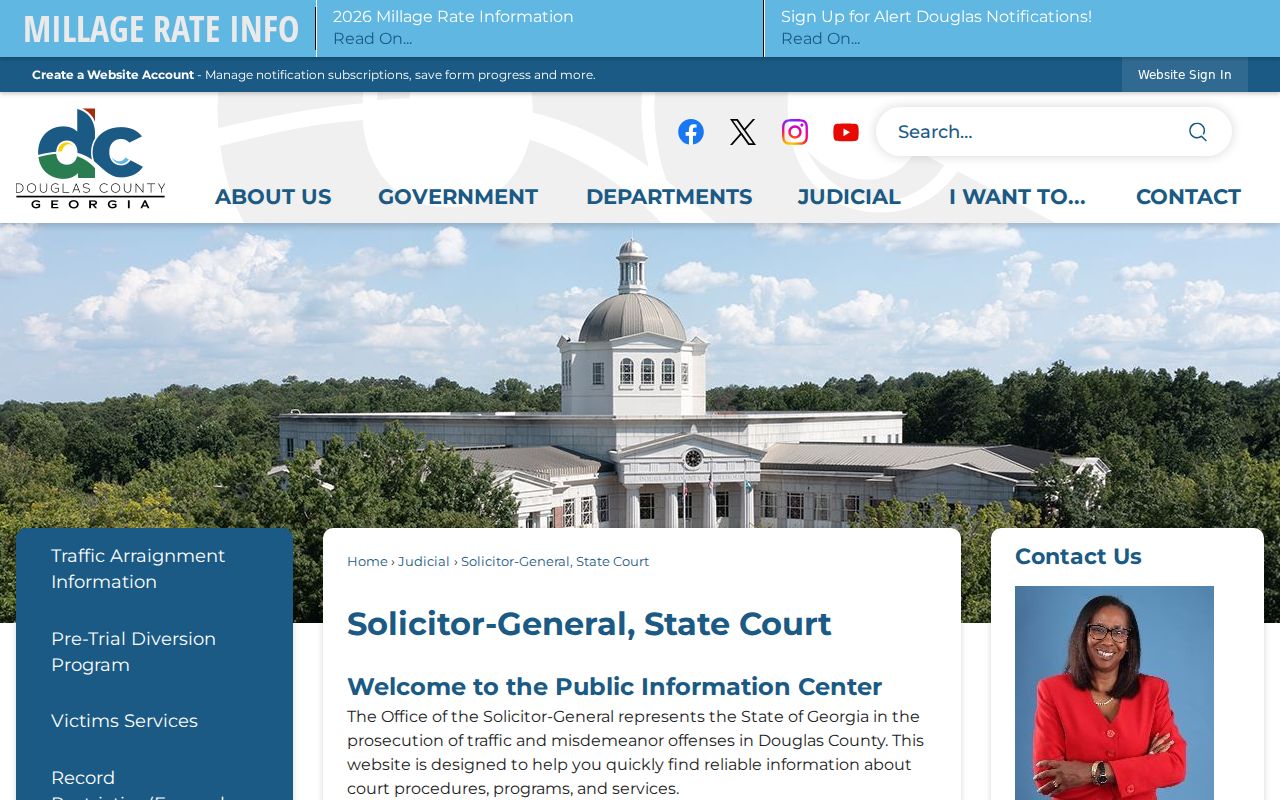
Before travel, confirm the current hearing time. The jail and Magistrate Court pages disagree on Monday's bond-hearing start, which shows why a current call matters.